Of the 22,672 posts we read in the largest perimenopause community over twelve months, sleep came up more than anything else — more than hot flashes, more than periods, more than mood. It is not a side effect of perimenopause in the way it gets written about. For most of the women describing it, it is the main event.
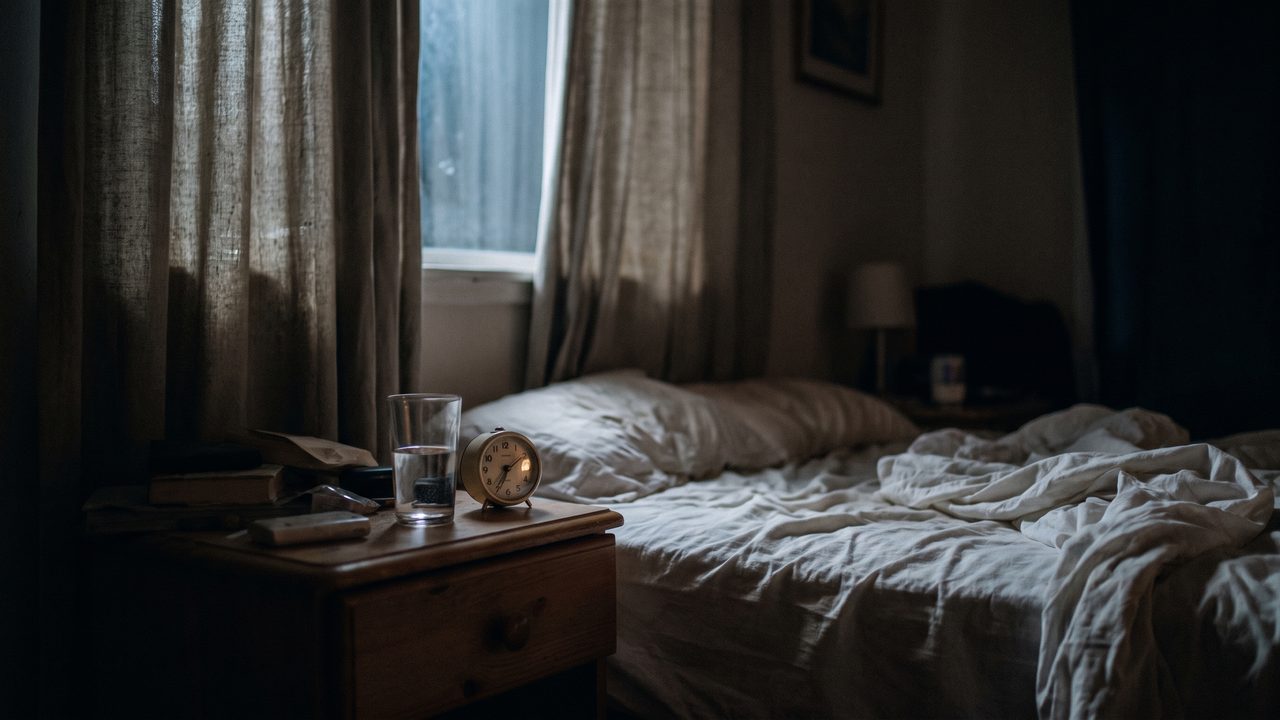
And the hour is oddly specific. The community has a running thread called the 3AM Club. Women post into it at three in the morning, from bed, and other women answer, because they are also awake.
Why am I waking up at 3 a.m. every night?
The short version is that the hormone doing most of the sedating leaves first.
Progesterone has a genuinely calming effect on the brain — it acts on the same receptor system that sedatives do. In perimenopause, progesterone tends to decline earlier and more steeply than estrogen, and in cycles where no egg is released there may be very little of it at all. Meanwhile cortisol, which runs on a daily curve, begins its ordinary climb toward morning at around two or three o'clock. That climb is supposed to happen underneath sleep. With less progesterone buffering it, you feel it, and you wake.
Estrogen is doing something separate and equally relevant. It is involved in how the body regulates its core temperature, and core temperature has to fall and stay low for sleep to hold. When estrogen is fluctuating — and in perimenopause it fluctuates rather than simply declining — thermoregulation gets noisy. A night sweat is the dramatic version. A silent half-degree rise that lifts you out of deep sleep is the common one.
This is why the pattern matters more than the fact. Trouble falling asleep and trouble staying asleep are different problems with different solutions, and perimenopause is overwhelmingly the second kind.
I slept for 9.5 hours last night and I had to share it with people who would know what a rare miracle that is!
That post earned more than sixteen hundred upvotes. A full night's sleep, reported as an event.
What actually helps with perimenopause sleep?
Here is the honest framing: none of this is a cure, and anyone selling you one is selling you something. What follows are the levers that are genuinely yours to pull, ordered roughly by how much difference they make for how much effort.
Alcohol is the biggest one, and the least welcome
If you change one thing, change this one. Alcohol is a sedative on the way in and a stimulant on the way out. It puts you to sleep quickly and then, as your body clears it, produces a rebound in alertness roughly four to five hours later. A glass of wine at half past seven lands that rebound at about three in the morning.
Tolerance also tends to drop in perimenopause — a great many women describe two glasses now doing what four used to. So the same habit that was survivable at thirty-five is producing a different night at forty-four.
You do not have to stop. Moving it earlier and reducing the amount is usually enough to see whether it is your problem. Two weeks is enough to know.
Let the second half of the night have some fuel
A blood sugar dip overnight prompts a release of adrenaline and cortisol to correct it, and that is a waking. Women who eat lightly in the evening — which is very often the woman who is also trying to manage weight — are more exposed to this.
In practice: make sure the evening meal contains real protein, and if you are training hard or eating early, a small protein-containing snack before bed is a reasonable experiment. This is one of the places where weight-loss advice and sleep advice pull against each other, and it is worth knowing that is happening rather than quietly failing at both.
Get the temperature right, and get it right early
The room should be cold — most sleep guidance lands somewhere around 18°C, or the mid-60s Fahrenheit. Layers you can throw off beat a single heavy duvet. Natural fibres beat synthetics. A cool shower before bed helps more than a hot bath for this particular problem, because the aim is to help core temperature fall.
Morning light does more than evening darkness
Evening screen rules get all the attention, but the stronger lever is at the other end of the day. Light in your eyes within an hour of waking — outdoors, not through a window — anchors the cortisol curve where it belongs and strengthens the drop that lets you sleep. Ten minutes is a reasonable minimum. On a grey morning it still works; outdoor light on an overcast day is many times brighter than indoor lighting.
Caffeine has a longer tail than you think
Caffeine's half-life is roughly five to six hours, which means a quarter of a two o'clock coffee is still circulating at midnight. If sleep is broken, a hard cut-off around lunchtime for two weeks is a clean test.
Train, but watch the timing
Regular strength training improves sleep quality. Hard conditioning work late in the evening raises core temperature and cortisol at exactly the wrong hour. If evening is the only time you have, that is a real constraint and the answer is to shift the type of session rather than abandon it — strength work in the evening, intervals in the morning.
What I stopped doing that helped
Two things worth naming, because they are both popular and both counterproductive.
Tracking every night. Sleep scores from a ring or a watch have produced a recognised problem — anxiety about sleep data that itself damages sleep. If you are checking your score before you have had breakfast and feeling worse for it, stop wearing it for a month. You will know more than the ring does.
Chasing eight hours. The number is an average across a population, not a prescription for you. Aiming at a sleep window — same wake time, enough opportunity in bed — is more useful than aiming at a total, and it removes the nightly scoreboard.
When broken sleep is not perimenopause
This is the part that gets skipped, and it matters more than anything else here.
Sleep apnoea rises sharply around this stage of life and is badly underdiagnosed in women. Part of the reason is that the textbook picture — a heavy, snoring man — is not how it usually presents in a woman in her forties. In women it more often looks like insomnia, waking repeatedly, morning headache, and daytime exhaustion. It gets attributed to hormones, or to stress, or to being a busy mother, and the years go by.
If you wake unrefreshed no matter how long you were in bed, if you have been told you snore or stop breathing, if you have morning headaches, or if your blood pressure has crept up, ask specifically about a sleep study. It is a request worth making even if everything else on this page also applies to you.
Also worth ruling out: thyroid problems, low iron or ferritin (a common cause of restless legs, which itself wrecks the second half of the night), and the side effects of any medication you have started recently.
The thing nobody tells you
You are not sleeping badly because you are doing bedtime wrong. The overwhelming majority of the advice aimed at you — lavender, a wind-down routine, no screens after nine — is aimed at people who cannot fall asleep. You can fall asleep. You are being woken.
Once you understand that, the list of things worth trying gets much shorter and much more effective.